
A well-designed interior is not defined by furniture alone. The right lighting can change the mood, define a space and bring the entire design together of space. Many decorative lighting options available today, wooden pendant lights have become a distinctive choice for modern interiors.
They combine the warmth of natural wood with the visual impact of sculptural lighting, creating a feature that you can remain beautiful even when the light is switched off.
For new homeowners, architects and interior designers, It’s not just about the decorations. A thoughtfully selected wooden pendant light can add warmth to minimalist spaces, create a focal point above a dining table, soften contemporary materials and introduce a handcrafted element into a modern interior.
In this guide, we explore how to choose and use wooden pendant lights, where they work best, and what makes handcrafted wooden lighting different from conventional fixtures.
What Are Wooden Pendant Lights?
Wooden pendant lights are suspended lighting fixtures that incorporate natural or engineered from wood into their shade, frame or structure.
Unlike conventional metal or glass pendant lights, wooden lighting introduces natural texture, grain and warmth into the space. Depending on the design, a wooden pendant can provide ambient illumination, focused light or function primarily as a decorative statement piece.
Modern wooden pendant lights can range from minimal geometric forms to sculptural handcrafted designs.
The material itself also becomes part of the visual experience. Natural wood grain, subtle variations in colour and handcrafted detailing mean that each fixture can have its own character.
Why Are Wooden Pendant Lights Becoming Popular in Modern Interiors?
Modern interiors often use clean architectural lines, neutral colours, stone, glass, metal and other refined materials.
While these materials create a sophisticated appearance, too many hard surfaces can sometimes make an interior feel visually cold.
Wood introduces an organic counterpoint. A wooden hanging light can soften a contemporary space while maintaining a clean and sophisticated design language. It can also work as a visual bridge between furniture, flooring and architectural elements.
This is one reason wooden lighting works particularly well with:
- Modern interiors
- Minimalist interiors
- Contemporary homes
- Japandi-inspired spaces
- Scandinavian-inspired interiors
- Rustic-modern interiors
- Luxury residential projects
- Boutique hospitality spaces
The result is lighting that feels decorative without appearing disconnected from the architecture.
7 Ways Wooden Pendant Lights Can Transform an Interior
1. Create a Strong Focal Point
A statement pendant light naturally draws attention upward. A sculptural wooden pendant can become the visual centre of the space without requiring additional decoration.
This works especially well above:
- Dining tables
- Kitchen islands
- Living room seating areas
- Bedside zones
- Entrance foyers
- Reception areas
- Restaurant tables
2. Add Warmth to Minimalist Interiors
Minimalism does not have to mean sterile. A Natural wood can introduce warmth and texture while preserving the clean visual language of a modern room.
For example, a wooden pendant can work beautifully with:
- White walls
- Natural stone
- Beige or neutral upholstery
- Wooden furniture
- Microcement finishes
- Concrete surfaces
- Matte metal details
The contrast between natural wood and contemporary materials creates visual depth.
3. Make the Dining Area Feel More Intimate
The dining table is one of the most natural locations for pendant lighting.
A pendant positioned above the table visually defines the dining area, particularly in an open-plan home.
A warm wooden pendant can create a softer atmosphere around the table while making the dining area feel more intentional.
When selecting a wooden pendant light for a dining room, consider the table’s shape, size and surrounding architecture before deciding on the fixture.
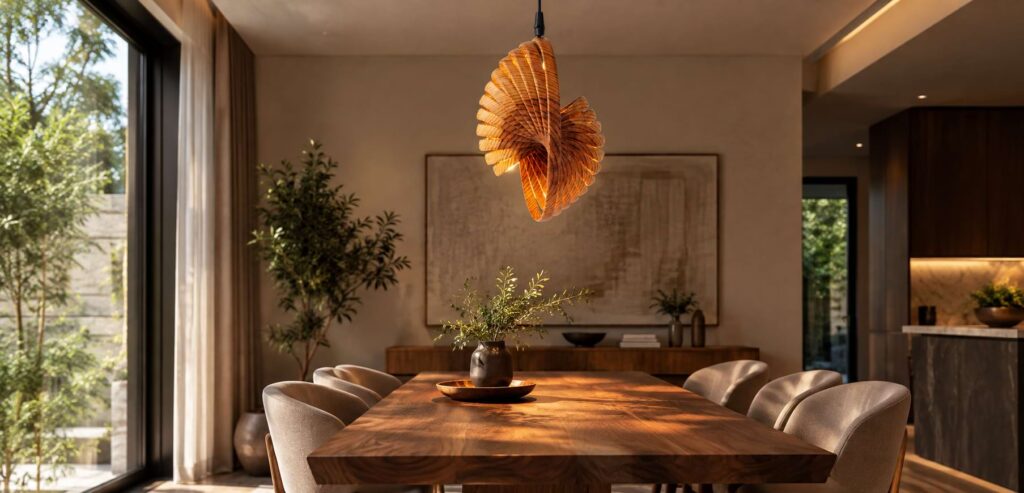
For a long rectangular table, a linear or clustered arrangement can work well. As a starting point, hang the lowest part of the pendant about 75– 90 cm above the tabletop.
4. Bring Nature Into Contemporary Spaces
Natural materials have a unique ability to make interiors feel connected to the environment. Wooden lighting brings that quality overhead, where it can become part of the architecture rather than simply another decorative object.
Natural grain, growth rings, knots and subtle variations give wooden fixtures a character that manufactured uniform surfaces cannot reproduce exactly.
This makes handcrafted wooden lighting particularly appealing for people who want interiors to feel personal rather than mass-produced.
5. Turn Lighting Into Functional Art
Lighting does not always have to disappear into the background.
A sculptural pendant can serve two purposes simultaneously:
It illuminates the space.
It contributes to the visual identity of the space.
This is where statement lighting becomes particularly powerful.
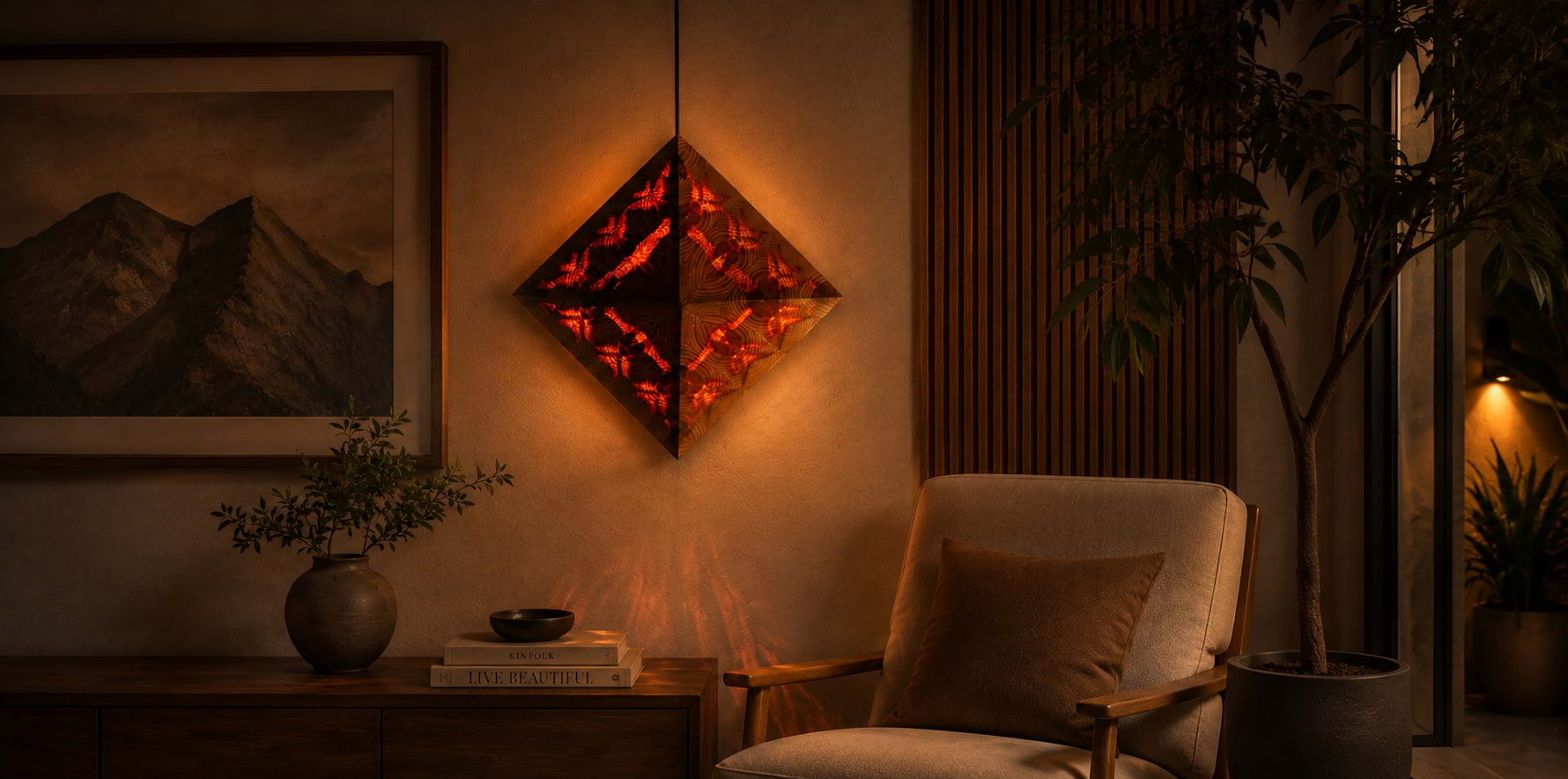
A carefully designed wooden fixture can function as an architectural feature during the day and become an illuminated artwork in the evening.
For luxury interiors, this can be more effective than filling the room with numerous decorative objects.
6. Add Texture Without Adding Clutter
One advantage of wooden lighting is that it can introduce visual texture without taking up floor or wall space.
A ceiling-mounted or suspended fixture adds another layer to the room while keeping the furniture arrangement clean.
This is particularly useful in minimalist interiors where every visible element needs to have a purpose.
7. Make the Room Feel More Personal
Mass-produced lighting often looks identical from one space to another.
Handcrafted wooden lighting offers a different experience.
Natural material variations and artisan finishing can make every piece subtly different.
Instead of simply purchasing a light fitting, homeowners and designers can introduce an object with its own material character and story.
How to Choose the Right Wooden Pendant Light
Choosing the right fixture involves more than selecting a design you like.
Consider these five factors before making a decision.
1. Consider the Size of the Room
The size of the pendant should relate to the room and the furniture beneath it.
A small pendant can disappear in a large room, while an oversized fixture can dominate a compact space.
For a dining area, consider the dimensions of the table first. As a general guide, a pendant above a table
should be roughly half to two-thirds of the table’s width, so it feels proportionate without crowding the
seating.
For a living room, consider the seating arrangement, ceiling height and viewing distance. The objective is balance rather than simply choosing the largest or smallest fixture.
2. Consider Ceiling Height
Ceiling height has a significant influence on pendant selection.
Higher ceilings can accommodate larger sculptural fixtures or longer drops, while lower ceilings generally require a more compact profile.
Above a dining table or kitchen island, the lowest part of the pendant is usually hung about 75–90 cm above the surface; with taller ceilings the drop can be increased proportionally. Where people walk directly beneath the fixture, the lowest point should generally clear about 2.1 m from the floor.
For dining applications, the pendant should also maintain comfortable sightlines across the table. Installation height should ultimately be adjusted according to the specific room, fixture design and electrical requirements.
3. Consider the Light Quality
The appearance of a wooden lamp depends not only on the material but also on the light source.
For residential spaces where a warm and relaxed atmosphere is desired, warm-white lighting is often preferred.
A colour temperature around 2700K–3000K is commonly used for warm residential ambience. LED light
sources are generally preferred with wooden fixtures because they run cooler than traditional incandescent
bulbs and offer better control over colour temperature and dimming
For projects requiring specific colour rendering, brightness or dimming performance, the light source and electrical components should be selected according to the project’s technical requirements.
4. Match the Material With the Interior
Wood does not have to match every other wooden element in the room exactly.
In fact, slight variation can make an interior feel more layered.
Instead of asking:
“Does the wood match perfectly?”
consider:
“Does the material belong to the overall palette?”
5. Think About the Fixture When It Is Switched Off
This is one of the most important considerations for decorative lighting.
A pendant is visible throughout the day.
Therefore, its silhouette, material and craftsmanship should work with the interior even without illumination.
A well-designed statement light should look intentional both lit and unlit.
Wooden Pendant Lights for Living Rooms
A living room often benefits from lighting that adds atmosphere rather than simply providing general illumination. A sculptural wooden pendant can be used above a central seating area or as a visual feature within an open-plan layout.
For larger living rooms, a statement fixture can help establish a focal point and give the ceiling greater visual presence. For more compact spaces, a smaller wooden hanging light can introduce natural texture without overwhelming the room.
The important thing is to consider the pendant as part of the overall lighting scheme rather than expecting one decorative fixture to illuminate the entire room. Combine decorative pendants with other suitable ambient, task and accent lighting where required.
Wooden Pendant Lights for Dining Rooms
The dining area is one of the strongest applications for pendant lighting. The fixture naturally connects the ceiling with the table below and creates a visual boundary around the dining zone.
When choosing a wooden pendant for a dining room, consider:
- Table shape
- Table width
- Ceiling height
- Number of fixtures
- Light distribution
- Viewing angles
- Existing materials
- Desired ambience
A single sculptural pendant can create a strong focal point over a round table. Longer dining tables may benefit from a larger fixture or carefully arranged multiple pendants.
The goal is to create a comfortable pool of light without allowing the fixture to obstruct conversations or dominate the table.
Wooden Ceiling Lights for Hospitality Spaces
Wooden lighting is not limited to residential interiors.
Hotels, restaurants, cafés and boutique hospitality spaces can use decorative wooden lighting to establish a distinctive atmosphere.
In hospitality design, lighting becomes part of the guest experience.
A handcrafted pendant can contribute to:
- Lobby identity
- Restaurant ambience
- Café character
- Dining-zone definition
- Boutique hotel aesthetics
- Reception areas
- Feature installations
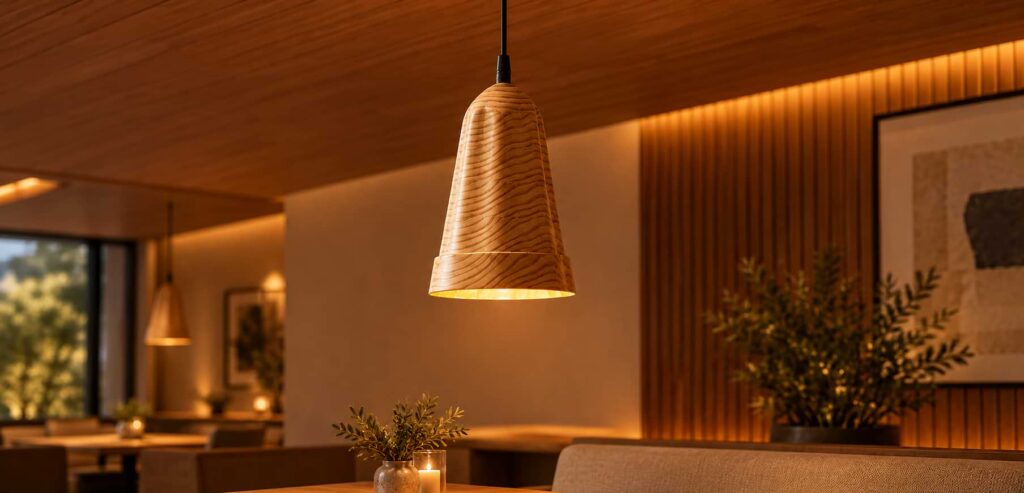
For architects and interior designers, material selection becomes particularly important in these environments.
The fixture needs to support the concept of the space while also meeting the project’s technical, maintenance and installation requirements.
Planning lighting for a hotel, restaurant or café? Send us your project brief or request the trade catalogue to
discuss custom sizes, finishes and quantities.
What Makes Handcrafted Wooden Lighting Different?
The difference between ordinary lighting and handcrafted lighting often lies in the details. With natural wood, no two sections of timber are completely identical.
Grain direction, growth patterns, texture and subtle colour variation can create differences from one piece to another.
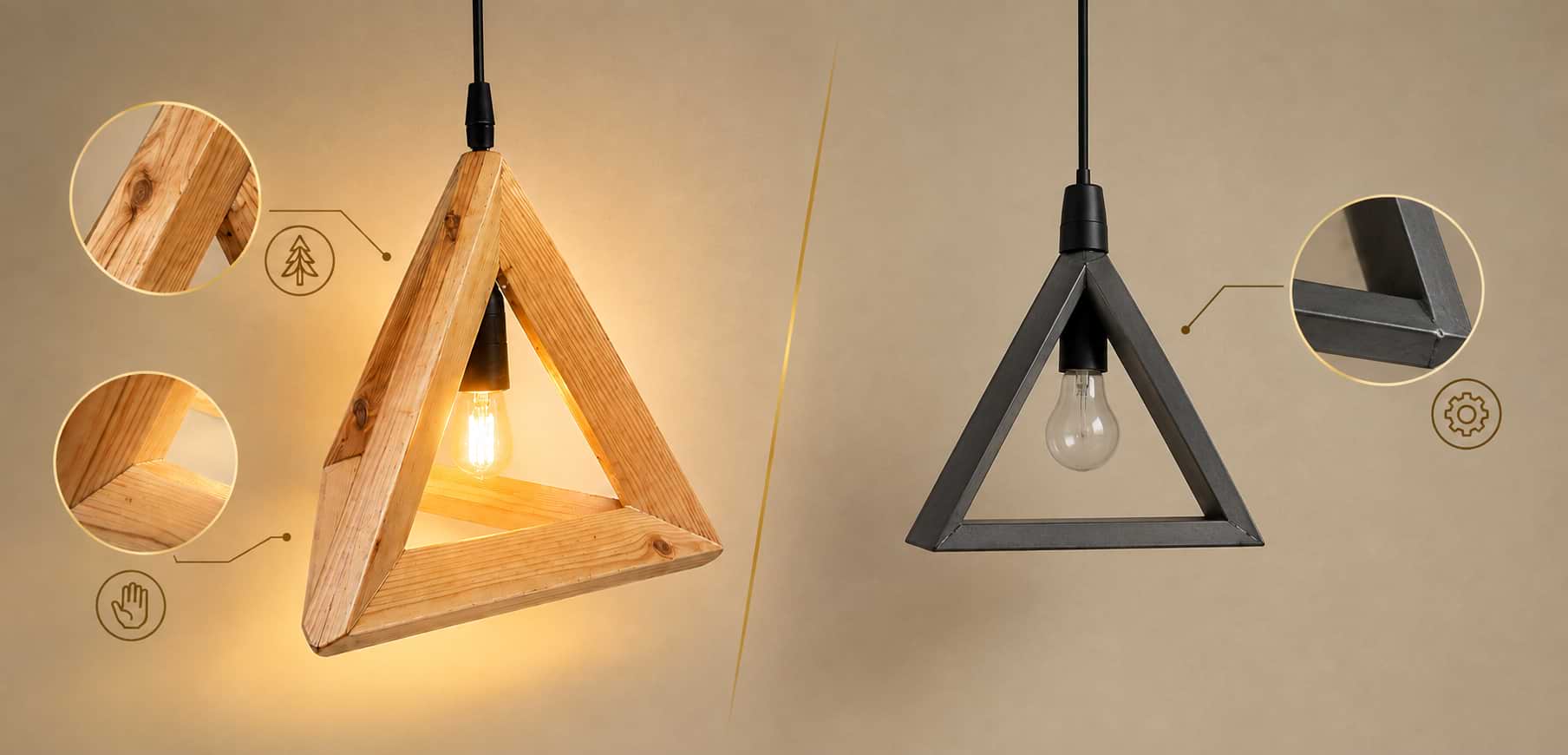
At Grehatitude, this natural character is central to the design philosophy.
We works with Southern Yellow Pine and its patented Pine Art technology, where natural growth-ring patterns become part of the illuminated design. Instead of making conventional linear cuts, the wood is sliced
in horizontal layers so that its annual growth rings and flowing patterns can emerge.
Instead of treating wood simply as a structural material around a light source, the material itself becomes part of the visual experience. When illuminated, the natural growth patterns can create a distinctive relationship between light, shadow and grain.
The result is a piece designed to function as both lighting and decorative art.
Why Natural Growth Rings Make Every Piece Unique
One of the most interesting characteristics of natural wood is that it carries a record of its growth.
Growth rings can vary in spacing, pattern and appearance. When those characteristics become visible through an illuminated wooden design, the result can feel much more organic than a perfectly uniform manufactured surface.
This is one reason handcrafted wooden lighting has such a strong visual identity. The light is not simply coming from the fixture.
It interacts with the material. And the material becomes part of the light.
Wooden Lighting as Part of the Architecture
The best statement lighting does more than decorate a room. It contributes to how the room is experienced.
A sculptural wooden pendant can create a focal point during the day, produce warm illumination at night and add material depth throughout the room.
This makes it particularly suitable for interiors where the lighting itself is intended to become part of the design concept. For architects and interior designers, this opens another possibility:
lighting can become part of the architecture rather than being added after the architecture is complete.
How Architects and Interior Designers Can Use Wooden Lighting
For design professionals, wooden lighting can be considered during the early stages of a project rather than as a final decorative selection.
Think about the fixture alongside:
- Ceiling proportions
- Furniture layout
- Material palette
- Circulation
- Sightlines
- Lighting layers
- Electrical planning
- Brand identity
- Installation requirements
For larger residential, hospitality or commercial projects, customisation may also be important.
Grehatitude works with architects, interior designers, hospitality brands, developers and retail chains to develop
handcrafted lighting solutions for different spaces
Our process is simple: we discover your project requirements, collaborate on design and specifications, craft
each piece by hand, quality-check every product, and deliver to your doorstep or project site.
The team combines lighting and interior design experience, led by founder Mukund Chandak, an IIT Roorkee
electrical engineer who began his career in the lighting industry, with the Pine Art concept invented by
Jatinder Verma.
Final Thoughts
A pendant light can be much more than a source of illumination. The right fixture can define a dining area, soften a modern interior, introduce natural texture and become a visual focal point.
Wooden pendant lights take this idea one step further by combining light with the character of natural material.
For homeowners, they can bring warmth and personality into everyday spaces. For architects and interior designers, they can become an important material element within a broader lighting concept.
And for hospitality spaces, they can help create an atmosphere that guests remember.
At Grehatitude, we believe lighting should be beautiful both when it is illuminated and when it is not. Our handcrafted wooden lighting combines natural Southern Yellow Pine, artisan craftsmanship and our patented Pine Art approach to create lighting designed as functional art.
Looking for handcrafted wooden lighting for a residential, hospitality or commercial project? Explore the Grehatitude collection, download the trade catalogue, or contact us with your project requirements.
Frequently Asked Questions About Wooden Pendant Lights
Yes. Wooden pendant lights can work particularly well in modern, minimalist, contemporary, Scandinavian and Japandi-inspired interiors because they introduce natural texture and warmth without requiring visual clutter.
Use in dining areas, living rooms, kitchen islands, bedrooms, foyers, restaurants, cafés, hotel spaces and reception areas.
Yes. Pendant lighting can visually define a dining area while providing focused illumination around the table. The fixture’s size, hanging height and light distribution should be selected according to the table and room.
For warm residential ambience, 2700K–3000K is commonly preferred.
No. Natural wood contains variations in grain, growth patterns, texture and colour. These characteristics can make individual handcrafted pieces subtly different from one another.
Depending on the manufacturer and project requirements, wooden lighting can be developed or specified for different dimensions, configurations, finishes and applications. For larger architectural or hospitality projects, it is useful to discuss requirements before finalising the fixture.